

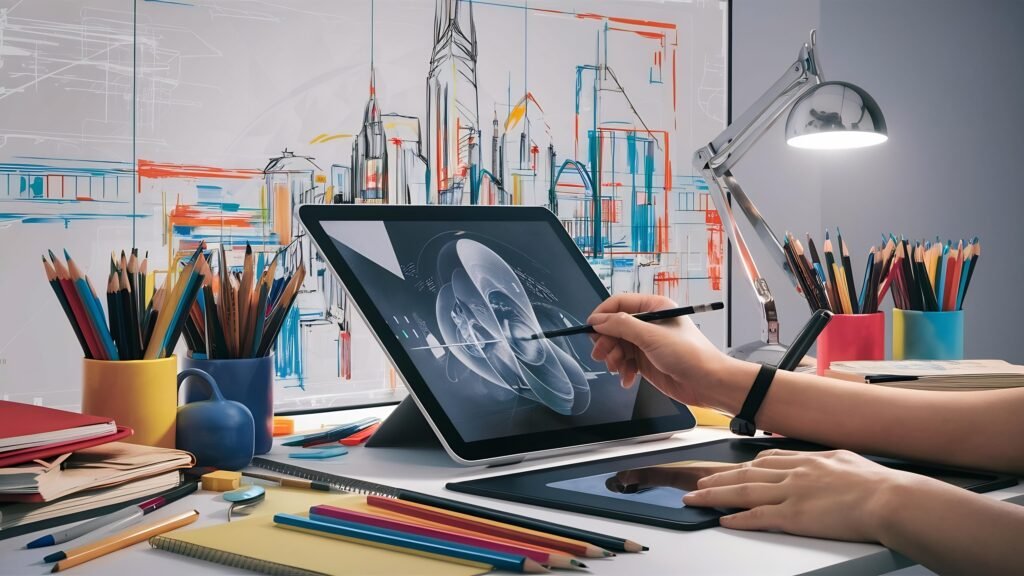
Design is a discipline that combines imagination, purpose, and practical thinking. In today’s evolving creative industries, designers are expected not only to create visually engaging outcomes but also to respond thoughtfully to user needs, technology, and space. The Bachelor of Design (B.Des) programme at DC School of Design & Architecture, Trivandrum is structured to nurture this balance through an immersive four-year learning experience.
The programme integrates explorative and experiential learning, allowing students to gradually develop imaginative and conceptual abilities applicable to product, interface, and spatial design. Through a collaborative campus environment, students build professional design skills while also learning teamwork, leadership, and responsible design practice.
Across design institutes, B.Des programmes typically offer exposure to multiple specialisation areas that reflect the diverse applications of design today. Common focus areas include Product Design, Communication and Visual Design, User Experience and Interface Design, Fashion and Textile Design, and Spatial or Interior Design. These disciplines allow students to apply creative thinking to physical products, digital platforms, visual narratives, and built environments. While the structure and depth of each specialisation may vary by institution, the core objective remains the same, to develop designers who can respond creatively and responsibly to real-world challenges.
Within this broader design ecosystem, the B.Des programme at DC School of Design & Architecture, Trivandrum, is structured to support imaginative development in product, interface, and spatial design through explorative and experiential learning.
A Foundation Built on Exploration and Experience
The B.Des curriculum is designed to encourage curiosity, experimentation, and critical thinking. Rather than limiting learning to theory, students engage with real design processes, observing, analysing, prototyping, and refining ideas. This approach supports imaginative development while grounding creativity in functionality and context.
Mentored by experienced faculty members and industry professionals, students are guided across multiple design disciplines. The programme is approved by the All India Council for Technical Education (AICTE) and affiliated to APJ Abdul Kalam Technological University (Kerala Technological University), ensuring academic credibility alongside practical exposure.
Focus Areas Within the B.Des Programme
The B.Des course supports students who wish to build careers across diverse yet interconnected design domains. These focus areas reflect the evolving needs of the design industry while remaining rooted in strong foundational learning.
Product Design
Product design introduces students to designing functional and meaningful objects for everyday use. Learning may include lifestyle products, consumer goods, packaging, and transportation-related concepts. This area helps students understand materials, form, usability, and user interaction while responding to real-world design challenges.
Experiential and Interface Design (UXD)
User Experience Design focuses on creating value through meaningful interactions. The scope of experience design includes Interaction Design, User Interface (UI) Design, User Research, Information Architecture, and Usability Analysis. Students are introduced to the principles behind intuitive and user-centric digital experiences.
With the growing relevance of immersive technologies, learners may also explore Extended Reality applications such as AR( augmented reality), VR (virtual reality), and MR(mixed reality), gaining insight into how digital and physical experiences can merge thoughtfully.
Spatial Design
Spatial design allows students to work with interior and exterior environments, exhibitions, and visual merchandising. The discipline focuses on understanding space, movement, materials, and context. Students with a strong interest in spatial thinking may also engage with 3D spatial simulation and visualisation, supporting better conceptualisation and communication of design ideas.
Learning Through Collaboration
A key strength of the B.Des programme at DC School of Design & Architecture, Trivandrum is its collaborative learning environment. Design education thrives on dialogue, critique, and shared problem-solving. Students learn to work in teams, present ideas clearly, and respond constructively to feedback, skills that are essential across all design professions.
Preparing for a Dynamic Design Landscape
The design industry continues to evolve with changing technologies, lifestyles, and user expectations. The B.Des programme equips students with adaptable skills and a design mindset that supports lifelong learning. Rather than training for a single outcome, the course encourages students to develop the ability to think, explore, and respond creatively across domains.
Conclusion
The B.Des programme at DC School of Design & Architecture, Trivandrum, offers a structured yet flexible design education rooted in exploration, experience, and collaboration. By engaging with product, interface, and spatial design disciplines, students build a strong foundation to navigate the diverse and ever-changing world of design with confidence and clarity.
FAQ’S
What is the duration of the B.Des programme?
The Bachelor of Design (B.Des) programme is a four-year, full-time undergraduate course designed to provide immersive and structured design education.
s the B.Des programme approved and affiliated?
Yes. The programme is approved by the All India Council for Technical Education (AICTE) and is affiliated to APJ Abdul Kalam Technological University (Kerala Technological University).
What learning approach does the B.Des programme follow?
The programme follows an explorative and experiential learning approach, enabling students to develop imaginative, conceptual, and practical design skills over the four-year duration.
What design areas does the programme focus on?
The B.Des programme supports learning in product design, interface and experience design (UXD), and spatial design, allowing students to understand how design functions across physical, digital, and spatial contexts.
Does the course include experiential or interface design?
Yes. Students are introduced to experience and interface design, which may include interaction design, user interface principles, user research, information architecture, and usability analysis.
Who mentors and conducts the B.Des programme?
The programme is conducted and mentored by experienced faculty members and industry professionals across various design disciplines.
What skills does the B.Des programme help develop?
The programme helps students build design thinking, creativity, teamwork, leadership, and professional design skills, preparing them to engage with evolving design practices.