

Author: Er. Ameena K S, Assistant Professor, DC School of Architecture and Design, Vagmon.
Mathematics has played a major role in architecture across eras, shaping the way we plan, generate, and interact with buildings. Mathematical concepts influence every aspect of architectural design—from ancient monuments to modern skyscrapers.
For instance, historical structures like the Parthenon in Greece showcase the use of symmetry, harmony, and the Golden Ratio as key design principles. As part of the first- and second-semester subject Mathematics for Design, students at DC School of Architecture and Design, Vagamon, are given exercises related to basic mathematical concepts, helping them build their knowledge from the ground up.
Undeniably, mathematics provides a strong foundation for budding architects. Calculus, geometry, and trigonometry are used in structural calculations to determine stability, material requirements, angles of elevation, and load-bearing capacities. These computations ensure that a building can withstand natural forces such as wind and earthquakes while remaining structurally sound.
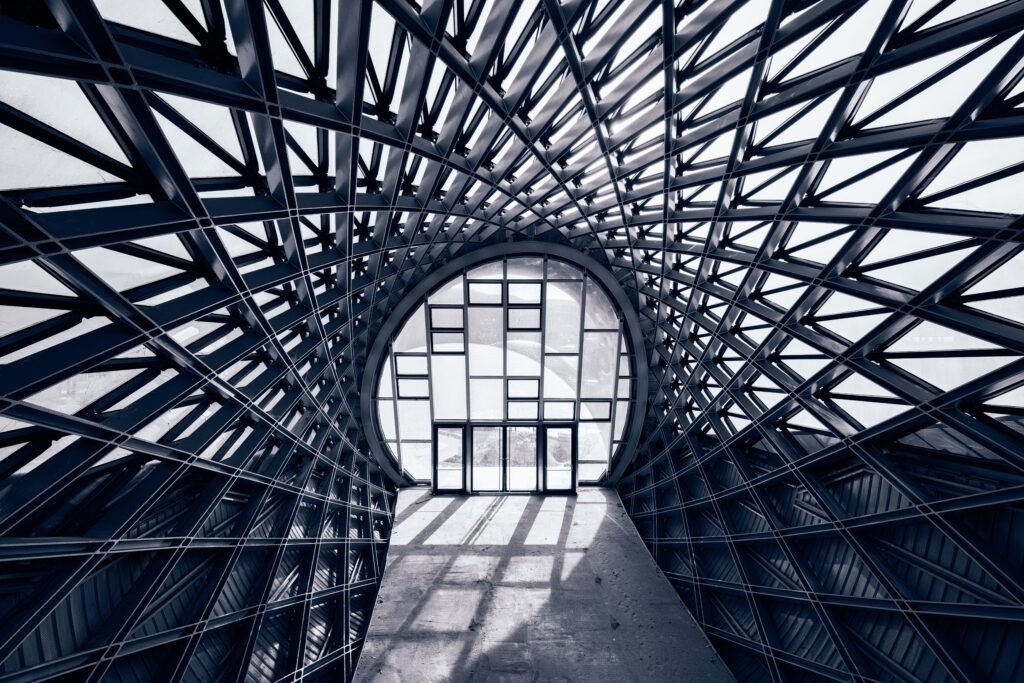
Geometry in Architecture
Geometry plays a significant role in architectural mathematics. To achieve balanced and visually appealing structures, architects rely on geometric shapes, scale, and proportion. The study of geometry begins with points, lines, angles, and planes, later extending to solids.
Geometry offers a mathematical framework for design. Fundamental principles such as symmetry, proportion, spatial occupancy, and fractals enhance visual appeal, structural efficiency, and design variation. Iconic examples of geometric architecture include the Guggenheim Museum, the Sydney Opera House, and the Taj Mahal. Geometry acts as a vital tool for aspiring architects, helping them transform creative ideas into meaningful designs.
Conclusion
Today, computer-aided design (CAD) software and mathematical modelling play an essential role in architectural practice, enabling precise planning and innovative design. Algorithms and digital simulations allow architects to create complex curves and forms that were once considered impossible.
In essence, mathematics is the silent architect behind every great structure. It bridges art and science, allowing vision to become reality in the form of durable, beautiful, and functional spaces. It not only forms the backbone of architecture but also paves the way for future architects to shape an aesthetically rich and competitive world.