

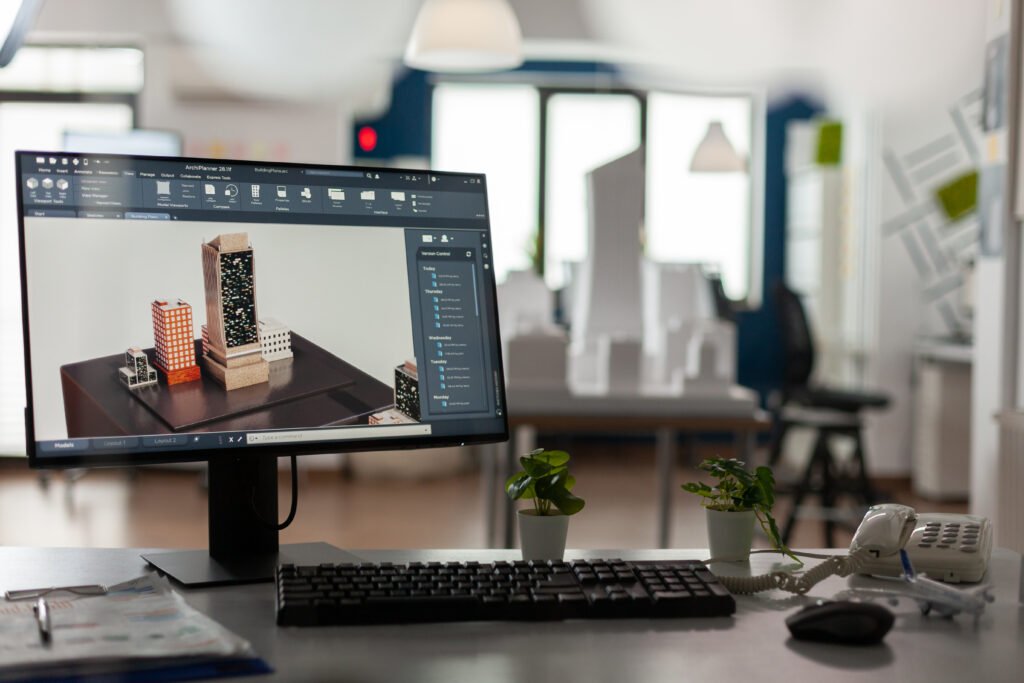
DCSAAD is a best architecture college in Kerala and one where students learn by experimenting rather than just drawing. Architectural education needs to go beyond theory and presentations in drawing. Students learn well only when their ideas have a physical realization. Some of the most transformative experiences are those where students get down and dirty, working physically with materials and making models. The faster and harder architecture moves into complex ambition, the more pressing the need is to marry theory with practice. Model making, in this regard, is far too often relegated to a presentation tool rather than a means to think through by doing. It grounds students in very practical understandings of space, structure, and form while simultaneously fostering their problem-solving abilities, creativity, and spatial reasoning.
Digital technologies posed powerfully in the paradigm shift of architectural workflows, but the very original act of making remained intact with replication. While digital models provide accuracy and quickness, most of them fail to gain that tactile perception and complaints about spatial feedback that interaction with physical materials offers. Physical model making allows students to intuitively delve into issues of scale, proportion, material behavior, and construction logic. Model-making is practiced in DC School of Architecture and Design, Vagamon- the top college of architecture in Kerala. It is also an articulated method of teaching fundamental principles in architectural graphics and drawing techniques that include orthographic projections, isometric views, and perspectival representation. These drawing systems, paired with physical modeling, enable students to have a comprehensive grasp of architectural visual representation.
Building Knowledge through Prototypes In the Advanced Building Technology course at our architecture school, I incorporated a model making module to help students engage with innovative building systems. The focus was on constructing models that represented advanced architectural technologies, including: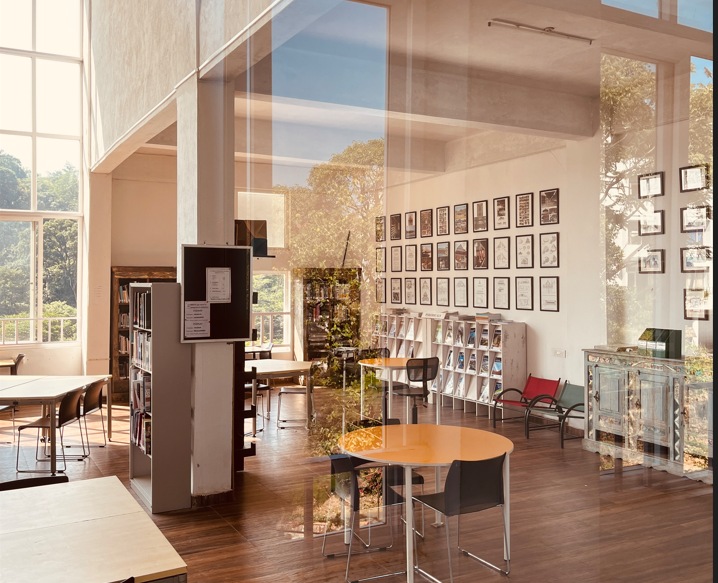
Kinetic architecture – buildings with dynamic or movable parts
Pneumatic structures – lightweight constructions supported by air pressure
Tensile structures – systems using tensioned fabric or cables Mobile and temporary architecture – adaptable structures designed for movement or short-term use Rather than relying solely on lectures and images, students were encouraged to interpret these technologies by building scaled prototypes using basic materials such as cardboard, fabric, wires, syringes (for pneumatics), and simple joints.
The transformation in understanding was immediate and impressive. Students began to grasp the mechanical and structural logic of each system how movement can transform space, how air pressure can support enclosure, or how tensile elements distribute force through geometry. Concepts that initially felt abstract or overly technical became approachable and engaging through physical experimentation. Thus DC School of Archtitecture, the finest architecture colleges in Kerala make students learn it.
Thinking this hands-on process enhanced the students’ in DC school of architecure , appreciation for the material and structural behavior of each system. Moreover, it triggered important questions about real world feasibility, sustainability, and user experience. Students who are learning B.arch in our college, were not only learning about the systems they were learning to question, iterate, and innovate. The exercise also introduced students to interdisciplinary thinking. For example, understanding kinetic systems required insight into mechanical linkages; working on tensile models led to discussions about forces, tension, and anchorage systems; pneumatic structures prompted exploration of air flow, pressure regulation, and flexible membranes. Importantly, students learned to collaborate, manage time and resources, and respond to failure skills that mirror the realities of professional architectural practice.
While digital modeling and parametric tools are essential in modern architectural design, the act of physically crafting a model still provides unmatched educational value. Many of the top architecture colleges in Kerala and across India are re-emphasizing the role of craft and physical exploration in their curricula. Manual model making helps cultivate a material sensitivity and attention to detail that is often lost in digital workflows. It fosters empathy toward construction processes, labor, and fabrication. When students work with their hands, they begin to see architecture not only as a set of drawings, but as a built reality that involves materials, joints, labor, gravity, and time. Workshops and studio-based learning environments that encourage this kind of exploration make architectural education more grounded, engaging, and holistic.
Learning that lasts Model-making is more than a supportive exercise; it is a pedagogical strategy that turns passive learning into active inquiry. Through hands-on workshops, students learn to test ideas, visualize solutions, and understand spatial relationships in ways that digital screens alone cannot provide. In the context of architecture education in Kerala, where institutions are constantly striving to bridge theory and practice, the integration of model-making and material exploration into the curriculum is a powerful way forward. These experiences prepare students not only for academic success but for a future where they must design with creativity, responsibility, and technical intelligence. By empowering students to learn through making, we reaffirm the architect’s most fundamental tools: curiosity, craftsmanship, and the ability to think in both mind and matter.
Also read : Why DCSMAT Appears On Top As The Finest MBA College in Kerala with Placement?